Rules
Silent sets: Europe's electric-only waters
Where combustion engines are banned but electric boats are allowed: 246 lakes, reservoirs and canals in 14 European countries, with the rule for each.
9 October 2026 · 8 min read
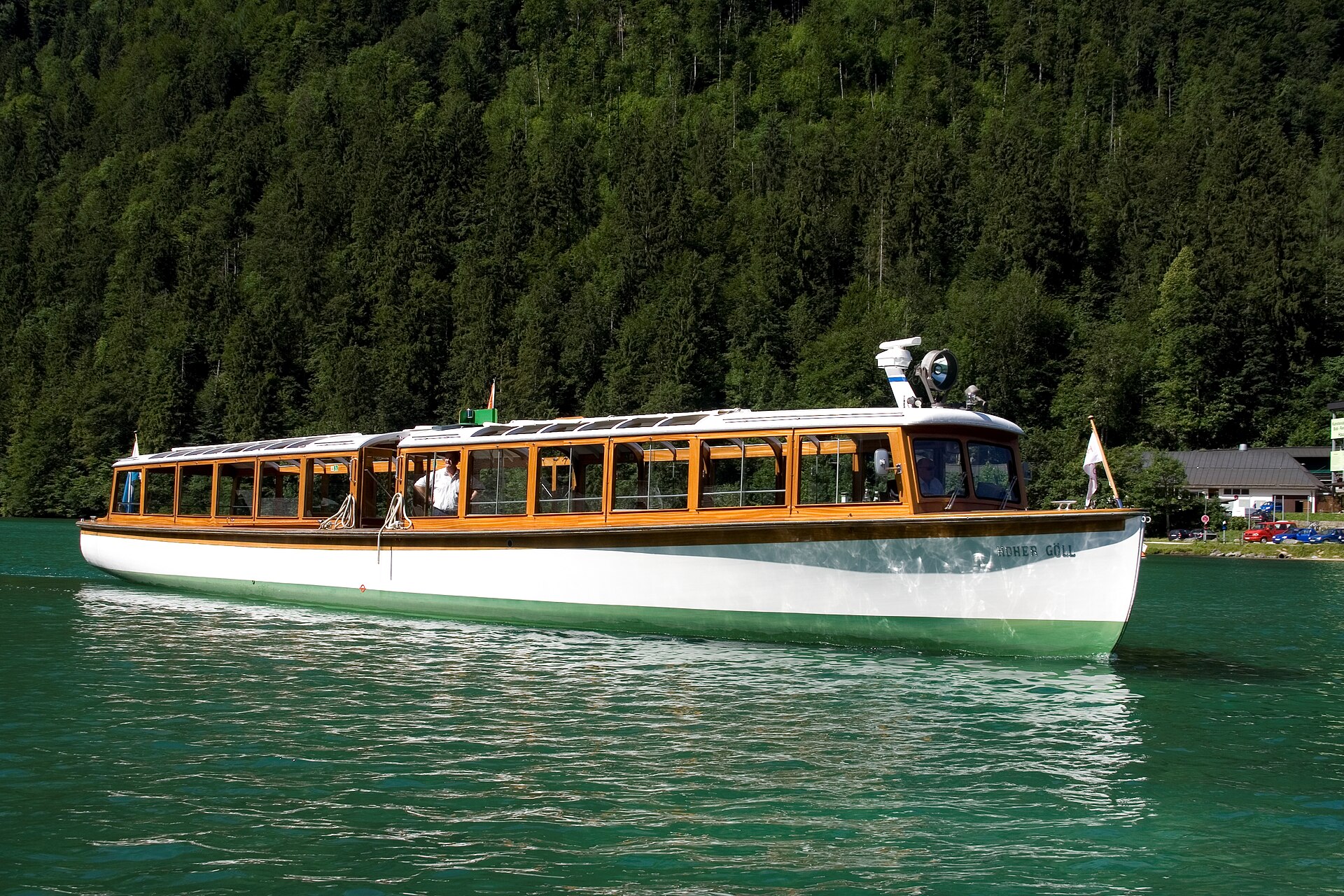
Picture a lake at dawn. Glassy, empty, not a whiff of two-stroke. Then someone fires up a 150 horsepower outboard and the whole valley flinches. A growing list of European lakes has decided it has had enough of that. We went through the regulations so you know where electric gets you in and petrol gets you a fine.
Across Europe, a growing number of lakes, reservoirs and city canals are closed to petrol and diesel engines but open to electric boats. We went through the regulations country by country and confirmed 246 named waters in 14 countries. This is about finding those secret spots where you can paddle out without a cloud of blue smoke following you. It is the most complete list we have managed to put together, but since the rules change like the tide, we keep the full, filterable register at Electric-only waters.
If you are looking for a session away from the roar of internal combustion, you have come to the right place. We have done the boring bit, reading the decrees and the prefectoral orders, so you can focus on the water. Whether you are on a slow cruiser or a ROXEN recreational craft, knowing the locals only rules is the difference between a glassy morning and a heavy fine.
Reading the line-up: what counts as electric-only
No two countries write the rule the same way, which is a classic kook move from the regulators. We had to sort every entry into a few buckets so you know what you are dropping in on. Some places are wide open for any electric quiver, while others are as exclusive as a private reef.
First, there are the pure electric-only spots. Combustion engines are banned for private leisure boats and electric drive is allowed, though usually with a power limit. Some of these limits are so low they wouldn't push a surfboard through a flat spell.
Then you have the permit or quota systems. Combustion engines need a permit that is capped in number or harder to get than a perfect barrel on a bank holiday. Electric boats usually get the green light more easily. Some places use seasonal or time bans, keeping the petrol motors away for the quiet months or the best part of the day. Finally, there are zones or boat types, where the electric requirement applies to just one stretch of water or specific rentals.
We left out waters where private boats may not use any motor at all. Those are quiet waters, sure, but they are not electric waters for our purposes. We want places where the technology gets you out into the line-up while others are stuck on the beach.
The big set: the numbers by country
Here is how the continent stacks up. Some countries are leading the charge, others are still waiting for the groundswell to arrive.
| Country | Named waters | The short version |
|---|---|---|
| Austria | 77 | Combustion bans across Tyrol, Upper Austria, Carinthia and Burgenland |
| Czech Republic | 61 | One decree bans combustion engines on 61 reservoirs |
| Poland | 35 | County councils declare silence zones, mostly in Masuria |
| United Kingdom | 20 | The Lake District's small lakes |
| Germany | 15 | Federal reservoirs, Steinhuder Meer and a permit system in Bavaria |
| Netherlands | 11 | City centres and marked electric routes |
| Spain | 8 | Reservoirs in the Guadiana basin |
| Hungary | 5 | Lake Balaton, Lake Velence and Lake Fertő |
| Italy | 4 | The lakes around Rome |
| France | 4 | Aiguebelette, Sainte-Croix, Saint-Cassien and Paladru |
| Finland | 3 | Lake-by-lake decisions |
| Sweden | 2 | Drinking water lakes near Gothenburg |
| Denmark | 1 | Furesø, by permit |
Norway is the fourteenth country on our list. Its rule covers a category instead of named lakes. On every lake smaller than 2 km², a municipality may allow electric motors up to 800 W. It is not a named list, but a category that covers thousands of small ponds.
Locals only: Austria's strict lake rules
Austria regulates lake by lake and state by state. The result is the densest set of rules in Europe. They run their lakes like a locals only break with very specific entry requirements.
In Tyrol, combustion engines are banned on 33 named lakes. Electric motors are limited to 500 W. That is roughly a hairdryer on its laziest setting. If you show up with a high-power recreational craft, you will be disappointed. Achensee is the generous one, at 2,200 W. Paddle out with more than that and the water police will drop in on you.
Upper Austria has 17 smaller lakes allowing only electric motors up to 500 W. Hallstätter See allows 1,000 W, and Mondsee bans combustion engines all year. On Attersee and Traunsee the ban is seasonal, from 1 July to 31 August, plus every night between 21:00 and 07:00. Carinthia works with quotas: Wörthersee has a ceiling of 335 private boats with combustion engines and a waiting list that lasts years. In Burgenland, Neusiedler See is closed to any vessel that has a combustion engine on board, even if it is switched off. We cover all of this in detail in Austria's lakes: where combustion engines are banned.
A clean groundswell: the Czech and Hungarian bans
The Czech Republic takes the simplest approach. Decree 46/2015 lists 61 reservoirs and 61 river sections where vessels with combustion engines may not be used. Hybrids count as combustion here. The decree does not restrict pure electric motors, leaving the water glassy for the silent crew.
Hungary is just as clear. They ban small boats with internal combustion engines on Lake Balaton, on all of Lake Velence and on the Hungarian part of Lake Fertő. Exemptions need a one-year operating permit for a specific purpose, such as rescue or regatta support. The ban does not cover electric motors, making Balaton a massive playground for the electric set.
Paddling the rest of the continent
In Poland, county councils can declare silence zones under environmental law. It is like a local code that everyone has to follow. The county of Mrągowo lists 25 lakes and rivers. Neighbouring Giżycko and Pisz add ten more. Local sources confirm that the Giżycko and Pisz rules ban combustion engines only, although the signs on site sometimes suggest otherwise.
Germany is a bit of a patchwork. The federal rule for Edersee and Diemelsee excludes leisure craft with combustion engines. Steinhuder Meer allows electric motors up to 10 horsepower. Bavaria usually issues permits for combustion engines on two lakes only, Starnberger See with 280 and Ammersee with 150.
France has few such lakes, but the rules are as sharp as a reef. Lac de Saint-Cassien got a new prefectoral order on 30 March 2026. Combustion engines are banned on the whole reservoir, and electric boats may run at up to 10 km/h with a maximum of 18.4 kW. In the Netherlands, the change is happening in the city canals. Amsterdam's centre has been an emission-free zone for pleasure craft since 1 April 2025. See Amsterdam's emission-free canals.
The United Kingdom has the Lake District, where small lakes like Buttermere and Crummock Water are kept for the quiet boats. Spain has 8 reservoirs in the Guadiana basin, including Alange and García de Sola, which are perfect for a quiet session away from the crowds.
Watch out for the wipeout: common mistakes
Several well-known waters appear on lists like this one without belonging there. It is easy to get caught out if you haven't checked the latest swell.
- Königssee, Germany. Private craft are banned completely. No kayaks, no boards, no private electric boats. Only the ferry company's electric boats operate.
- Lake Annecy, France. Combustion engines are allowed. Personal watercraft are not.
- Lake Bled and Lake Bohinj, Slovenia. Private electric craft are actually banned on both.
- Geirangerfjord and Nærøyfjord, Norway. The zero-emission rule applies to passenger ships, not private boats. See Norway's zero-emission fjords.
- The northern end of Lake Garda, Italy. All private motor boating is banned in the Trentino part, electric included.
Don't drop in on the power limit
Electric-only does not mean any electric boat can just cruise in. Most Alpine lakes set a power limit that fits a small tender or a fishing boat and nothing faster. Read the limit before you travel. A lake that allows 500 W is a different session from a reservoir that allows 18.4 kW.
Three more things are worth checking before you paddle out:
- Permits. Some waters require a navigation permit for every craft, as Lac d'Aiguebelette does.
- Seasons. Steinhuder Meer is closed to boats from 1 November to 19 March.
- Local signs. Where a sign and a list disagree, the sign and the local authority decide.
How we checked the swell
Every entry in our register links to its source. We read each one on 8 October 2026. Entries marked as official are based on a regulation, a decision or an authority's own page. Entries marked as secondary come from press, tourist boards or trade sites and should be confirmed locally.
The list is not complete. Europe has thousands of small lakes with local rules, and Switzerland, Portugal, Sweden and Denmark have no single register to check. If you know a secret spot that belongs here, tell us and we will add it to the line-up.
So, is it worth the effort? If you want to cruise in silence on a quiet lake, absolutely. These rules are a groundswell that is only getting bigger. Knowing the local code is the only way to ensure you don't get a fine when you just wanted a glassy morning on the water.
Questions
Which European country has the most electric-only lakes?
In our register, Austria has the most named waters with 77, followed by the Czech Republic with 61 reservoirs and Poland with 35 lakes and rivers.
Can I use any electric boat on an electric-only lake?
Not always. Many lakes set a power limit for electric motors. Tyrol allows 500 W on most lakes, Hallstätter See allows 1,000 W and Lac de Saint-Cassien in France allows 18.4 kW.
Is Königssee an electric-only lake?
Only for the ferry company. Private craft of every kind are banned on Königssee, including kayaks and paddleboards.
Is Lake Annecy closed to combustion engines?
No. Combustion engines are allowed on Lake Annecy. Personal watercraft are banned there, which is a different rule.
How often do these rules change?
Often enough to check before every trip. Saint-Cassien got a new prefectoral order in March 2026 and Amsterdam's zone started in April 2025.
Sources
- Kärnten, K-RSS lake navigation regulation
- Oö. Seen-Verkehrsverordnung 2005
- Czech decree 46/2015 Sb.
- Hungarian government office, operating permit information 2026
- Powiat Mrągowski, waters with a combustion engine ban
- Préfet du Var, order on Lac de Saint-Cassien, 30 March 2026
- Lake District National Park, small lakes byelaws
- Confederación Hidrográfica del Guadiana, resolution of 27 November 2008