Charging
Plug in, paddle out: how to charge an electric boat
How to charge an electric boat using household sockets, marina shore power, or DC fast charging. Learn about kW power, charge times, and marine connectors.
9 October 2026 · 7 min read
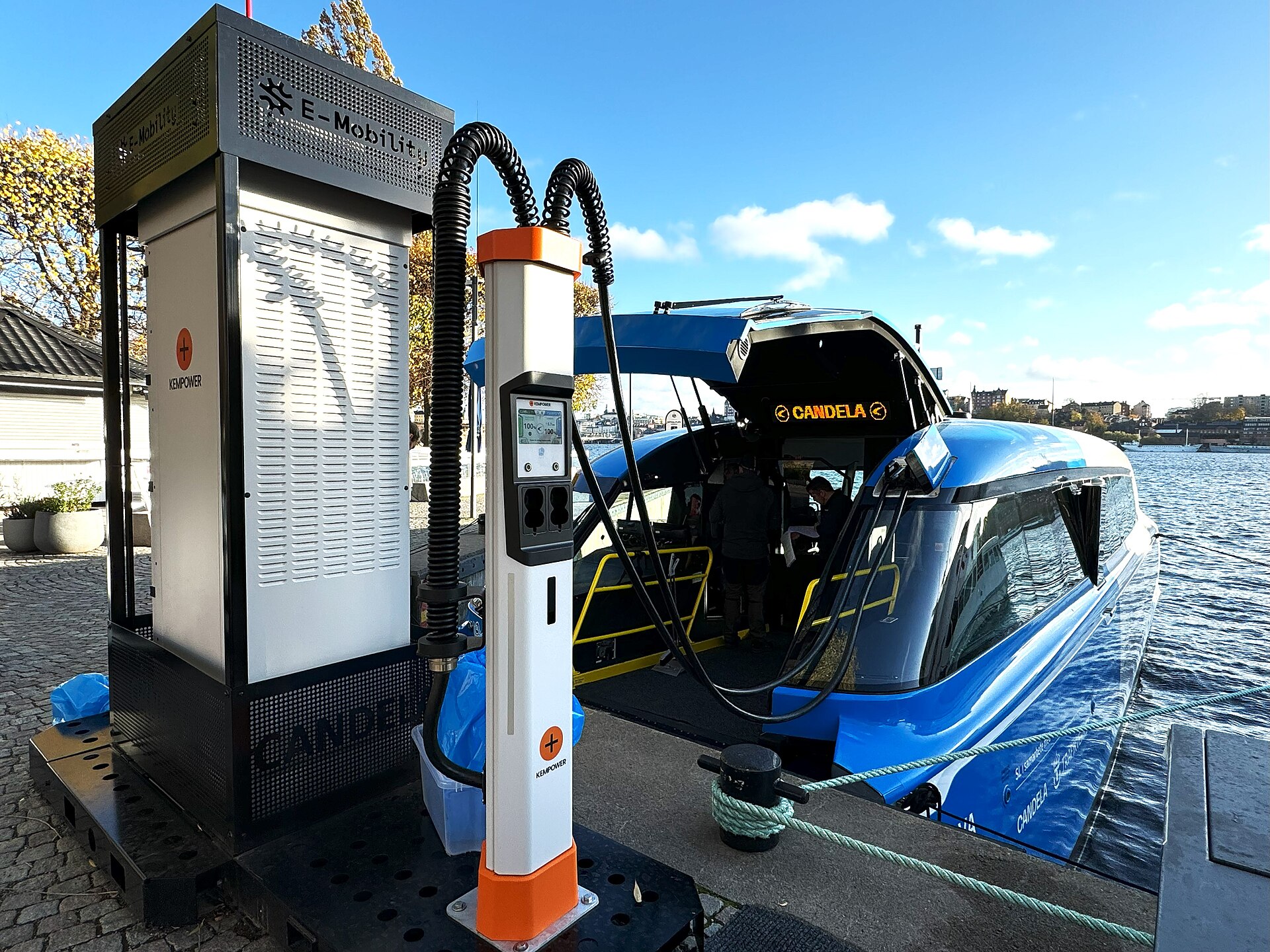
Picture a marina at sunset. The wind has dropped, the water is glassy, and the only sound is the gentle slap of the tide against the hulls. Then a three-deck motor yacht fires up its diesel generator to run the microwave. The valley flinches, the birds scatter, and you are left sitting in a cloud of blue smoke.
It is enough to make any self-respecting skipper want to paddle out and never come back. But the tides are changing. We have spent enough time untangling cables and squinting at pedestal fuses to know that charging an electric boat is not the dark art the petrol-heads claim it is. In fact, for most of us, it is as simple as plugging in a toaster.
The fear of being stuck with a flat battery is a bit like worrying about a flat spell in the middle of a groundswell. It happens, but if you know how to read the line-up, you will never be caught out. Most electric boats spend 95 percent of their lives sitting at a berth, which is basically just a very slow way of saying they are always charging.
Three ways to paddle out: your charging line-up
Most of the time, you are dealing with AC power. This is the same stuff that runs your house and the marina lights. The boat has its own on-board charger that takes this AC and turns it into DC for the battery. It is like having a built-in filter for a messy windswell.
1. The household socket
If you are running a light craft or a small portable outboard, you are in luck. You can plug straight into an ordinary 230 volt socket. We have seen this with the Mercury Avator range, where the batteries just clip off and head into the kitchen for a top-up.
A household socket can deliver about 2.3 kW continuously on a 10 amp circuit. That is roughly the same power as a decent kettle. If you have a 5 kWh battery, you are looking at about three hours to go from empty to full. It is the ultimate low-stress session.
2. Marina shore power
This is where most of the heavy lifting happens. Marina pedestals use those blue industrial connectors that every boater has tripped over at least once. What you get depends entirely on the pedestal.
| Supply | Power available |
|---|---|
| Single-phase, 6 A | about 1.4 kW |
| Single-phase, 10 A | about 2.3 kW |
| Single-phase, 16 A | about 3.7 kW |
| Three-phase, 16 A | about 11 kW |
| Three-phase, 32 A | about 22 kW |
Here is the kicker. These are the limits of the supply, not the boat. If your boat has a 3 kW on-board charger, it does not matter if you plug into a 22 kW three-phase pedestal. You are still only getting 3 kW. It is like trying to catch a massive set wave on a tiny foamie.
Older marinas often fuse their pedestals at 6 or 10 amps. That is enough for a slow overnight charge, but do not expect to be ready for a dawn patrol if you arrived at midnight with an empty tank.
3. DC fast charging
This is the groundswell of the industry. Fast chargers bypass the boat internal charger and dump DC current straight into the battery. It is fast, it is powerful, and it is still a bit of a secret spot in many parts of Europe.
Marine fast charging in Europe uses CCS2, the same connector you see on electric cars. It is just built a bit tougher for the salt and the spray. The Yacht Club de Monaco has the top-end version, with a cabinet that can pump out 600 kW. That is enough to power a small village.
For a leisure boater, the Taiga Orca personal watercraft is a good example. It can charge in under 30 minutes on DC. On a normal AC socket, you would be waiting for the next tide.
Reading the swell: working out your charge time
We like simple sums because nobody wants to do calculus while they are trying to untie a fender. Here is the only formula you need.
Charge time in hours = battery capacity in kWh ÷ charging power in kW × 1.1
That extra 10 percent is for the tail of the charge. As a battery gets full, the management system slows things down to keep the cells happy. It is like the last few metres of a ride when the wave loses its punch.
| Battery | Supply | Approximate time |
|---|---|---|
| 1 kWh portable outboard | Household socket, 0.5 kW charger | about 2 hours |
| 5 kWh light craft | Household socket, 1.75 kW charger | about 3 hours |
| 10 kWh sailboat conversion | Single-phase 16 A, 3 kW charger | under 4 hours |
| 40 kWh day boat | Three-phase 16 A, 11 kW | about 4 hours |
| 40 kWh day boat | DC fast charger, 75 kW | about 35 minutes |
The Candela C-8 launched with a 44 kWh battery and quotes a charge time of about two hours on three-phase power. In the real world, you rarely charge from zero. Usually, you are just topping up after a session, which takes much less time.
Dawn patrol ready: charging overnight is the standard
Cars made fast charging famous because drivers need it on long journeys. Boats are different. A boat is a leisure craft, not a commuter tool. Most are used for a few hours and then sit at a dock while you are asleep or at work.
That makes slow charging the natural fit. If you return to the harbour at 18:00 and plan to leave at 10:00 the next morning, you have sixteen hours on the pedestal. Even a basic 3.7 kW supply will put more than 50 kWh into the battery. That is more than enough for most day boats.
Fast charging matters for the pros: the ferries, water taxis, and rental fleets that need to turn around between sets. The Stockholm electric hydrofoil ferry runs for about three hours and then charges for one. For us mortals, fast charging is just a luxury for when you want to stop for a long lunch. You can see the current line-up in our guide to fast charging for boats in Europe.
The spare board: swappable batteries
Some small craft avoid the wait entirely. You just lift the battery out and drop a fresh one in. It is the ultimate way to stay in the water. We see this with portable outboards and some lighter sit-on craft.
The trade-off is the weight and the cost. You have to buy two batteries, and you have to be strong enough to carry them. For rental operators, it is a no-brainer as the boat keeps earning money while the spare battery charges.
Staying glassy: practical charging tips
We have seen enough kooks make mistakes to know that a bit of preparation goes a long way.
- Bring the right cable. Most marina pedestals use blue CEE connectors, either 16 A or 32 A. Carry adapters so you are not the one begging for a loaner.
- Know your charger limit. Check your manual. Buying a high-power cable is a waste of money if your boat charger is a low-power model.
- Ask about the bill. Some marinas include electricity in the berth fee, while others meter it. A flat daily rate can make a tiny top-up feel like a wipeout.
- Keep it dry. Salt water and electricity are not friends. Keep your connections off the pontoon. If a plug gets splashed, rinse it with fresh water and dry it thoroughly.
- Respect the temperature. Lithium batteries are like surfers: they do not like being too cold. If it is freezing, the charging will be slow. Check our guide on battery care for electric boats.
Cheap stoke: what it costs
Charging is incredibly cheap compared to the heart-attack prices at the fuel dock. At average European household prices, a full 40 kWh charge costs about 13 euros. Try doing that with a tank of petrol. We have done the full maths in our article on what an electric boat costs to run.
So, is it worth the switch. If you like the quiet and the feeling of a glassy morning, then yes. The charging is just a part of the rhythm. Plug in, go home, and when you come back for your next session, you are ready to paddle out.
Questions
Can I charge an electric boat from a normal socket?
Yes. Small and mid-size systems are designed for it. A 5 kWh battery takes about three hours on a household supply.
How long does it take to charge an electric boat?
Divide the battery capacity in kWh by the charging power in kW and add about 10 percent. A 40 kWh battery on an 11 kW three-phase supply takes about four hours.
What connector do electric boats use for fast charging?
In Europe, CCS2, the same standard as electric cars. Marine fast chargers use weather-protected versions of it.
Can I use a car charger for my boat?
Only if the charger is installed for marine use at the water and your boat has a compatible port. A charger in a car park is rarely within reach of a berth.
Does fast charging harm the battery?
Occasional fast charging is what these batteries are built for. As with cars, routine charging at lower power is gentler.
Sources
- Electrek, Aqua superPower high-power charging in Monaco, 6 November 2023
- Kempower, marine charging
- Taiga Motors, next-generation Orca lineup, 9 September 2025
- Marine Industry News, Candela C-8 launch, 27 August 2021
- Mercury Marine, Avator electric outboards
- SVT Nyheter, electric hydrofoil ferry in Stockholm