Guides
Save the quiver: electric boat battery care
How to make an electric boat battery last: charge levels for storage, temperature limits, winter routine and the warning signs that mean stop.
9 October 2026 · 5 min read
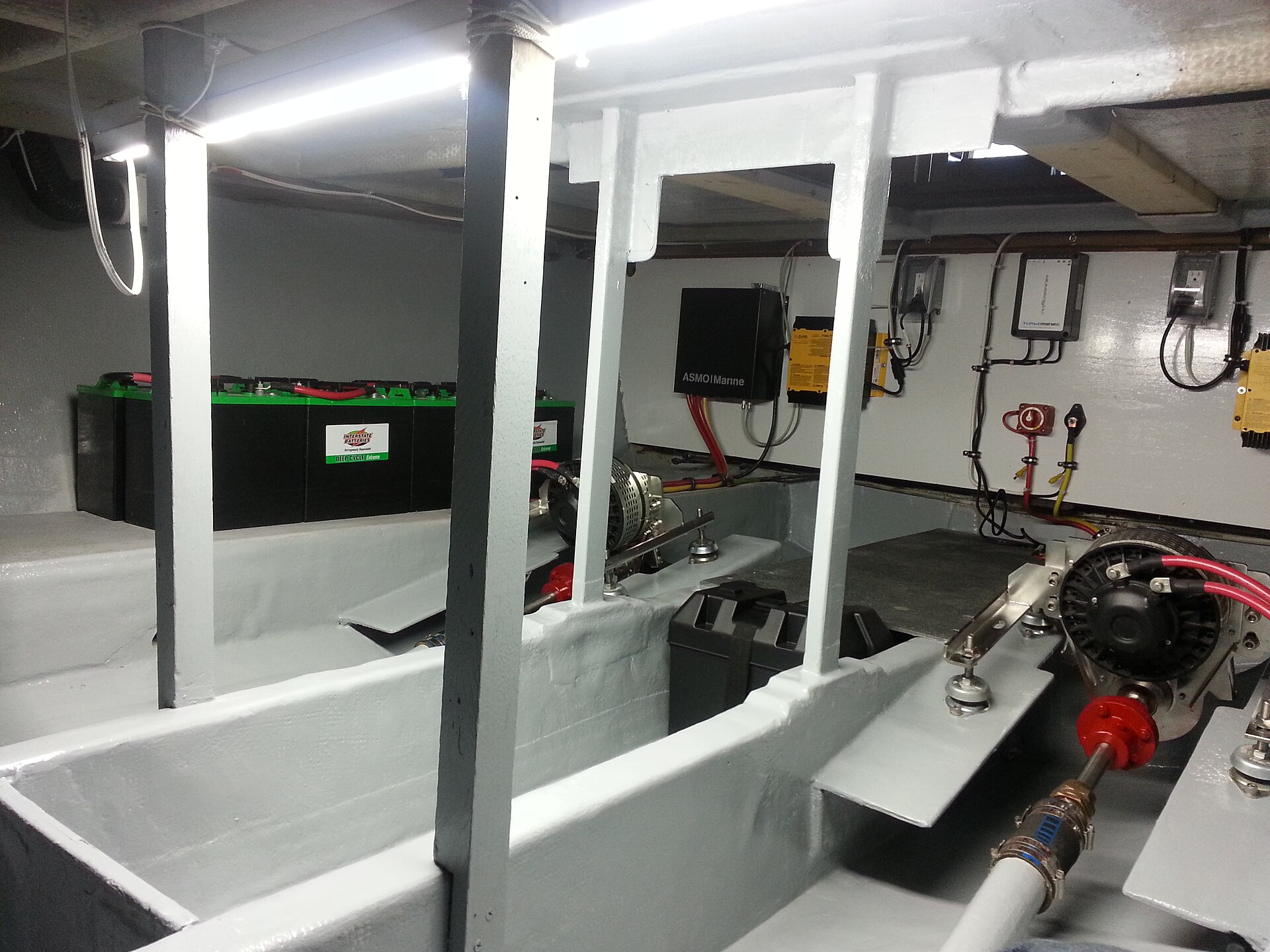
Picture a flat spell that lasts six months. You leave your board in the garage, but when you return, the wax has melted and the board has snapped in two. That is what a winter in a cold, damp shed does to a boat battery. We have seen batteries that cost as much as a small car become expensive doorstops because someone forgot a three-month top-up.
The battery is the most expensive part of an electric boat and the part that ages. How you treat it decides whether it lasts for many seasons or disappoints after a few. Most of what it needs is simple, and most of the damage happens in storage, not in use.
One rule comes before all the others: the maker's manual wins. Batteries differ in chemistry and in how their management systems behave. Where this guide and your manual disagree, follow the manual.
What kills the stoke
Four things shorten a lithium battery's life. Heat is the main one. High temperatures speed up ageing, in use and in storage. Standing full is next. A battery kept at 100 percent for months ages faster than one kept partly charged. Standing empty is just as bad. A battery left at a very low charge can fall below the level it can recover from. Finally, deep cycles matter. Running it flat every time is harder on it than using the middle of its range.
Everything below follows from those four.
Dawn patrol and day to day
When you are heading out for a dawn patrol, you want everything ready. But for the rest of the time, a little care goes a long way.
- Charge before you go, not after you return. If the boat will sit for a week, there is no need for it to sit full.
- Avoid running it flat as a habit. One outboard maker advises against regularly going below 20 percent. An occasional deep discharge does no harm.
- Do not charge a hot battery. After a hard run, let it cool before plugging in.
- Rinse salt off. Fresh water on the casing and connectors after a day at sea, then let them dry before charging.
- Keep connectors clean. Corroded contacts cause heat. A light inspection each time takes seconds.
The winter glass-off
This is where batteries are saved or ruined. When the water is glassy but too cold to enjoy, your battery needs a safe place to hibernate.
The guidance for ePropulsion's Spirit outboard battery is a good example of what makers ask for.
| Condition | Guidance |
|---|---|
| Charge level before storage | 60 to 80 percent |
| Storage temperature | 15 to 25 °C, in a dry place |
| Check interval | About every three months |
| Charging temperature | 5 to 30 °C |
| Never operate | Below minus 10 °C or above 60 °C |
Other makers give different figures for charge level, so check yours. The pattern is the same everywhere: partly charged, cool but not cold, dry, and checked a few times over the winter.
Why the check matters? A stored battery loses charge slowly on its own, and its electronics draw a little as well. If the charge falls far enough, the battery can discharge to zero. A lithium battery that has sat at zero is usually finished and must be replaced. Ten minutes with a charger every three months prevents it.
Where to keep it? A removable battery belongs indoors, in a dry room at normal temperature. Not in an unheated shed and not in a car. A battery built into the boat should be stored with the boat somewhere frost-free, or kept on a maintenance routine the maker approves.
Before spring arrives, bring the battery to room temperature, inspect the casing and connectors, charge it fully and check that it reaches its normal capacity.
A winter routine in six steps
Follow this set to ensure your gear is ready for the first swell of spring.
- Rinse and dry the battery and its connectors.
- Charge or discharge to the storage level in your manual.
- Switch the battery off, or disconnect it, as the manual describes.
- Store it dry, at room temperature, away from anything flammable.
- Set a reminder to check the charge every three months.
- In spring, inspect, charge fully and test.
Wipeout warning signs
A wipeout on a wave is one thing, but a battery failure is another. Stop using a battery, and do not charge it, if you see any of these.
- Swelling or deformation of the casing.
- Damage from a drop or a collision.
- Signs that water has got inside.
- Unusual heat during charging or at rest.
- A chemical smell, hissing or smoke.
- A sudden, large loss of capacity.
Move a suspect battery outdoors if you can do so safely, away from buildings, and contact the dealer. Damaged batteries are treated differently in transport as well. They may not travel by air at all, and they need special packaging by road.
How long will the set last
No one can give a figure that holds for every battery. Lifespan depends on chemistry, on how deeply the battery is cycled and above all on temperature and storage. It is like waiting for a set, you know it is coming, but you cannot be sure of the exact timing.
Two practical points help. First, leisure boats do few cycles. A boat used thirty days a season puts far fewer cycles on its battery than a car does. Calendar ageing, the wear that happens just with time, usually matters more than cycle count. That is why storage habits count for so much. Second, the warranty tells you what the maker expects. Read how many years it covers and what capacity it guarantees at the end. Ask what a replacement costs.
The final session
When the battery finally reaches the end of its line-up, do not put it in household waste. And do not leave it in the shed for good. Return it to the dealer or the maker, or take it to a collection point that accepts lithium batteries. They contain materials worth recovering, and an old battery left alone is a fire risk.
So, is it worth the effort? If you want your battery to last ten years instead of three, absolutely. It is a groundswell problem: a little care now saves a massive bill later.
Keep it cool, keep it dry, keep it partly charged when you are not using it, and look at it every three months. That is most of what a battery needs.
For what charging involves day to day, see How to charge an electric boat.
Questions
At what charge level should I store a boat battery over winter?
Follow the manual. As an example, guidance for ePropulsion's Spirit battery is to charge it to 60 to 80 percent before winter storage.
Can I leave the battery on the boat in winter?
If the boat is stored somewhere dry and frost-free, often yes. A removable battery is better brought indoors. Lithium batteries should not be stored below freezing.
How often should I check a stored battery?
About every three months. Batteries discharge slowly on their own, and a top-up prevents the charge from falling too low.
Is it bad to charge to 100 percent?
Not before a day on the water. For storage over weeks or months, a partial charge is kinder to the battery.
Can I charge a lithium battery when it is cold?
Not when it is very cold. One maker gives 5 to 30 degrees as the range for charging. Let a cold battery warm up indoors first.