Charging
Plug in, paddle out: fast charging for boats in Europe
Marine fast charging in Europe in 2026: who runs it, where the chargers are, which connector they use and how to plan a trip around a thin network.
9 October 2026 · 5 min read
Electric cars became practical when fast chargers appeared along the motorways. For boats, we are still waiting for the big set to arrive. Fast chargers for boats exist, they work, and the technology is the same as on land. There are just not many of them yet. Right now, it is a bit of a dawn patrol situation: you have to get out early and know exactly where you are going.
If you plan a trip expecting a charger at every quay, you are in for a serious wipeout. We have been checking the charts to see where you can actually plug in and get back to the water. This is where things stand in 2026. We have read the press releases and checked the docks so you don't have to. Whether you are running a ROXEN recreational craft or a custom electric cruiser, the fast charging network is a thin line-up that needs careful planning.
The connector question: reading the line-up
Marine fast charging in Europe uses CCS2, which is the same connector found on almost every electric car sold in the region. The chargers at the water are basically car units in a wetsuit, built to cope with spray and salt.
That matters because it means boat builders don't have to invent their own gear. They can use components developed for cars, and harbour operators can buy hardware from established makers. Kempower, a Finnish firm, says its marine systems work with CCS and even MCS, which is a higher-power standard for the heavy hitters.
The makers are catching the wave. Taiga fits CCS2 fast charging as standard on its electric watercraft from 2026. The Candela C-8 uses DC charging technology borrowed straight from an electric car. It is a solid groundswell of standardisation that we like to see.
Who runs the chargers: the big operators
The best-known name in the line-up is Aqua superPower. They dropped in with their first station at the Yacht Club de Monaco in 2019 and have been adding sites across Europe and North America since.
In July 2026, it was announced that Aqua superPower had been integrated with NatPower Marine, a developer of port charging infrastructure. A summary of that announcement put Aqua's network at more than 80 fast chargers, mainly in the United States and Europe. They named Italy, the United Kingdom, Spain and China as targets for expansion. We should note that this summary was based on a press release, and we could not confirm those 80 sites independently. It feels more like windswell than groundswell until we see more chargers in the water.
Beyond the dedicated networks, individual harbours and municipalities are starting to install their own posts, often with public funding to get the project off the beach.
Where the chargers are: confirmed secret spots
There is no complete public map, and we are not claiming this is one. These are the sites we have actually confirmed in the sources we trust.
- Monaco. The Yacht Club de Monaco has a high-power system added in November 2023. One cabinet supplies up to 600 kW in total, shared between dockside posts with CCS2 connectors.
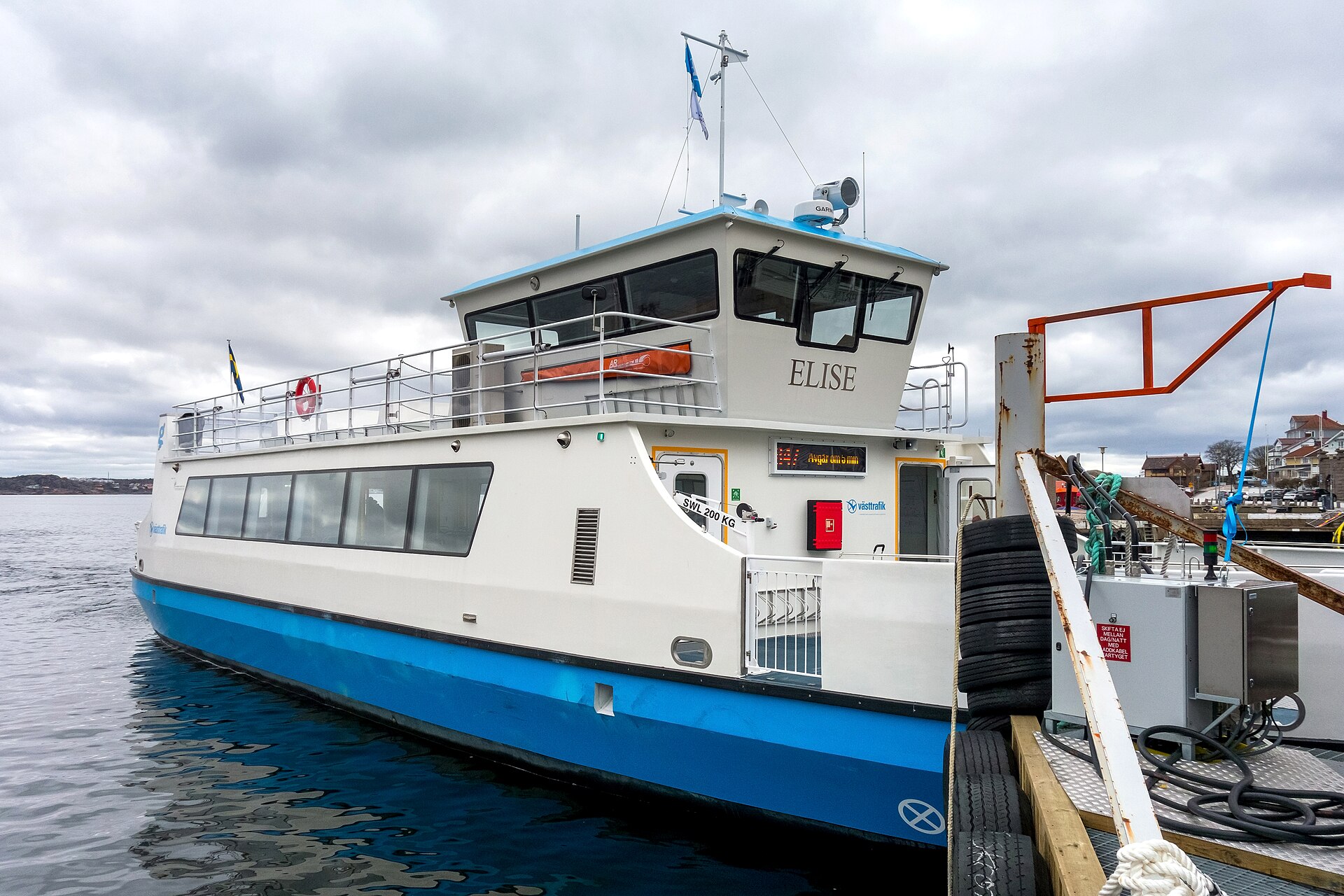
- Sweden, west coast. Fiskebäckskil reported Sweden's first fast charger for boats in June 2022. Kungshamn and Hamburgsund followed in September 2023. The aim is a chain of chargers along the coast, which is a proper dawn patrol route.
- Italy. Marina di Stabia in the Gulf of Naples has a station. There is a 75 kW charger at a shipyard in Gargnano on Lake Garda, reported in October 2025, with a second planned at Lazise. Some Italian sites are clever enough to serve cars and boats from the same kit.
- United Kingdom. Named as part of the network's expansion, though confirmed sites remain sparse.
The pattern is clusters, not coverage. A stretch of the Swedish west coast and a few Mediterranean marinas are well served. Most of the European coastline and nearly all inland waters are currently a flat spell.
Planning your session: what this means for a trip
Do not plan a cruise that depends on fast charging unless you have confirmed every single stop. If you just drop in on a harbour expecting a fast charge, you might find yourself paddling home.
First, call ahead. Ask if the charger is actually working, if it is open to visitors and how you pay. Then, check your boat. A DC port is not standard on smaller electric craft. Without one, a fast charger is about as useful as a broken leash.
Always have a fallback. Know where you can charge on AC overnight if the fast charger is occupied or out of order. And mind the berth: the charger has to be within cable reach of where you can moor. That is not always a given at a busy quay. For most leisure boating, the realistic plan is still AC charging at the berth, with fast charging as a bonus. See How to charge an electric boat.
Why the network is still a slow swell
Three things are holding back the big sets. First is the cost and grid connection. A high-power charger needs a massive grid connection, and many harbours are at the end of a weak line. The connection can cost more than the charger itself.
Then there is low utilisation. There are still few boats that can actually fast charge. A charger that serves a handful of boats a week does not pay for itself, so early sites depend on subsidies or a sponsor. Finally, there are the seasons. In northern Europe, the boating season is four or five months. The charger stands idle for the rest of the year.
What will change the tide
Commercial traffic is likely to do for boat charging what delivery vans did for cars. Electric ferries, water taxis and workboats run to a timetable and charge every day. They justify the grid connection, and leisure boats can use the same gear when the ferry is away.
Norway's requirement for zero-emission passenger ships in its World Heritage fjords, in force since 2026, is a great example of a rule that forces infrastructure into places that wouldn't otherwise get it. See Norway's zero-emission fjords. City rules in places like Amsterdam are pushing the same way, creating a fleet of boats that need to charge somewhere.
The verdict for harbour masters
If you run a harbour, the question is not whether to install a fast charger, but what your berth holders need first. For most, that is more AC capacity at the berths. We set out the options in What a harbour needs to welcome electric boats. Fast charging is the future, but for now, it is a bit of a niche session for the early adopters. If you have the right boat and the right route, it is pure stoke. If you don't, stick to the overnight charge and enjoy the glassy mornings.
Questions
Where can I fast charge an electric boat in Europe?
At a limited number of harbours. Confirmed sites include the Yacht Club de Monaco, three harbours on the Swedish west coast, Marina di Stabia near Naples and Gargnano on Lake Garda.
Which connector do marine fast chargers use?
CCS2 in Europe, the same standard as electric cars, in marine-grade versions.
How powerful are marine fast chargers?
It varies. The system at the Yacht Club de Monaco supplies up to 600 kW in total, shared between several connectors.
Who operates marine fast chargers?
The best-known dedicated operator is Aqua superPower, which was integrated with NatPower Marine in July 2026. Hardware makers such as Kempower supply the equipment.
Can my boat use a marine fast charger?
Only if it has a DC charging port. Many small electric boats charge on AC only. Check the specification before you plan around fast charging.
Sources
- Plugboats, Aqua superPower expands its marine charging network, 14 March 2024
- Electrek, Aqua superPower high-power charging in Monaco, 6 November 2023
- BriefGlance, NatPower Marine and Aqua superPower, 13 July 2026
- Kempower, marine charging
- Charged EVs, Aqua superPower fast charger on Lake Garda
- TV4, Sweden's first fast charger for electric boats
- Taiga Motors, next-generation Orca lineup, 9 September 2025