Rules
Avoiding the wipeout: personal watercraft rules across Europe
A guide to personal watercraft rules in Europe, covering licences, age limits, and bans. Find out where electric jet skis might have an advantage.
9 October 2026 · 5 min read
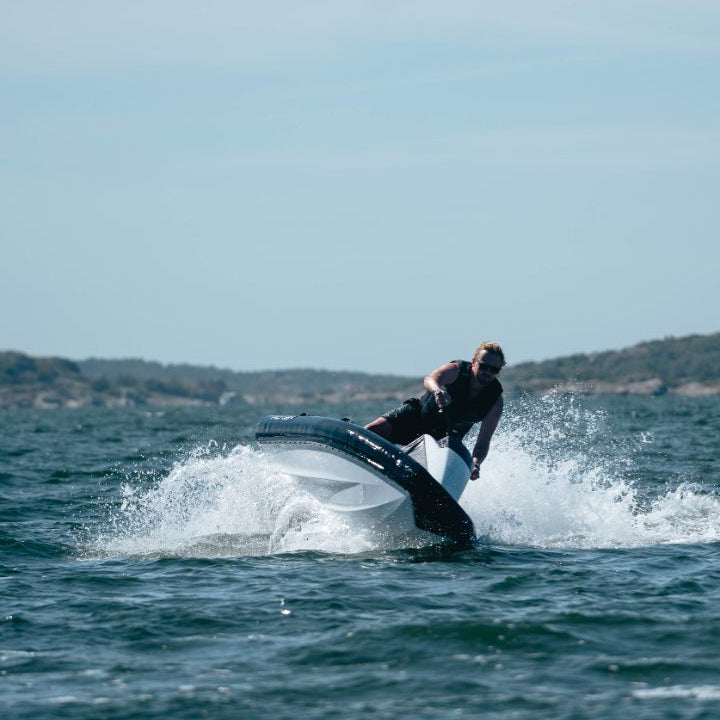
Personal watercraft are the most regulated craft in the line-up. They are fast, they can be incredibly loud when petrol-powered, and they can zip into shallow bays where even a small sailboat would run aground. Lawmakers have noticed, and they have responded with a messy chop of licences, age limits, and outright bans.
If you are planning to paddle out on a jet ski in Europe, you need to be prepared. One country might treat you like a boat, while the next might treat you like someone who has wandered onto a locals-only break. We have been through the regulations to help you avoid a total wipeout with the water police.
The rules are changing fast, especially as electric models like those from ROXEN and Taiga start to appear. We have seen rules written in the 1980s that are being hauled into the present day.
Messy chop: there is no single European rule
The EU sets the construction standards, but how you use the craft is up to each country. That produces three layers of rules. It is like reading the swell, the tide, and the wind all at once.
- National law sets the licence and the minimum age.
- Regional rules dictate where you may ride and how far from shore.
- Individual waters like Alpine lakes often have their own local bans.
Checking the break: licences by country
In most of Europe, you need a licence. Sweden and Denmark have even introduced dedicated PWC licences to manage the growing traffic.
| Country | What you need | Minimum age |
|---|---|---|
| Sweden | Personal watercraft licence, required since 1 May 2022 | 15 |
| Denmark | Personal watercraft licence | 16 |
| France | Boat licence above 4.5 kW | Not confirmed |
| Spain | Licencia de Navegación or higher | 16, or 18 in some regions |
| Italy | Boat licence for personal watercraft | Not confirmed |
| Germany | Boat licence above 7.5 kW electric or 11.03 kW combustion | Not confirmed |
| Netherlands | Certificate for craft able to exceed 20 km/h | 18 for fast craft inland |
| Norway | Boating licence above 25 hp, for those born in 1980 or later | Not confirmed |
| United Kingdom | No national licence | Set locally |
In the UK and Ireland, the lack of a national licence does not mean you have a free pass. Many harbours refuse to let you launch unless you can show a recognised certificate.
For a manufacturer's view, ROXEN publishes a country-by-country licence guide that also covers the United States and Australia.
Locals only: where personal watercraft are banned
Bans are usually local, and they can be brutal. You can be in a country that allows PWCs, only to find that the specific lake you wanted to ride is a locals-only spot for sailboats.
- Lake Annecy, France. Personal watercraft are prohibited. Motor boats with combustion engines are allowed, provided they have a licence above 6 horsepower.
- Lake Balaton, Hungary. Small boats with internal combustion engines are banned, which covers petrol PWCs.
- Hossa National Park, Finland. Water scooters and similar craft are banned on state waters in the park.
- Tegernsee, Schliersee and Spitzingsee, Germany. Motor boats are prohibited, and the district names electric foil boards as banned too.
- The Lake District, England. Twenty smaller lakes are closed to all power-driven vessels.
In Finland, the transport agency can ban a single type of craft on a specific lake, targeting water scooters while allowing other motor boats.
Etiquette in the water: distance and conduct rules
Where riding is allowed, expect rules like those in Denmark. You cannot ride within 300 metres of the shore, except to go straight out and back at no more than 5 knots. Nature reserves are completely closed, and you must have liability insurance.
The Swedish Coast Guard is equally direct: stay away from bathers, keep out of shallow bays, and remember that you are treated just like any other leisure boat under maritime law. Careless navigation will get you a fine faster than you can say "wipeout".
The electric set: what changes with a battery
This is the groundswell we are all watching. Does having an electric motor get you into places where petrol is banned. The answer is a frustrating "maybe".
Some rules are written around the engine. Hungary's ban on Lake Balaton targets boats with internal combustion engines. The Lake District's byelaws define a power-driven vessel as one propelled by an internal combustion engine. Under these specific words, an electric craft like a ROXEN might just slip through.
However, other rules are written around the craft itself. Lake Annecy bans personal watercraft by name. It does not matter if it is powered by petrol or electricity: it is still a PWC, and it is still banned.
Three things to keep in mind:
- The authority has the final word. An owner's reading of the law does not count for much when the water police are dropping in on you.
- Wording is being updated. The Lake District is already looking at extending its ban to include electric motors.
- Other limits apply. Even if electric motors are allowed, there is often a power cap. Check the specifics in our guide to Europe's electric-only waters.
Final check: before you paddle out
Before you hit the water, make sure your quiver is in order.
- Check the national licence requirements and ensure yours is valid.
- Contact the local harbour or authority to find out exactly where you can launch and ride.
- If your craft is electric and the local ban mentions engines, ask for the answer in writing.
- Carry all your craft's documents, including the declaration of conformity and proof of motor power.
- Check the insurance requirement. Several countries make liability cover mandatory.
For more on the craft themselves, see electric jet skis and personal watercraft in 2026. Stay safe, stay respectful, and enjoy the silence.
Questions
Do I need a licence for a jet ski in Europe?
In most countries, yes. Sweden and Denmark have a dedicated personal watercraft licence. France, Spain, Italy, Germany and the Netherlands require a boat licence.
Are jet skis allowed on Lake Annecy?
No. Personal watercraft are prohibited on Lake Annecy, although motor boats with combustion engines are allowed.
Are electric jet skis exempt from jet ski bans?
Not automatically. It depends on how the local rule defines the craft. Where a ban targets combustion engines, an electric craft may fall outside it, but only the authority can confirm that.
What is the minimum age to ride a personal watercraft?
It varies. Sweden sets it at 15 and Denmark at 16. Spain sets it at 16, or 18 in some regions.
Can I ride an eFoil where jet skis are banned?
Not necessarily. Several places that ban motor boats also ban eFoils by name, including lakes in the Bavarian district of Miesbach.
Sources
- Transportstyrelsen, personal watercraft
- Kustbevakningen, personal watercraft
- Navigation leaflet for Lake Annecy, July 2015
- Hungarian government office, operating permit information 2026
- Lake District National Park, small lakes byelaws
- Landratsamt Miesbach, boating leaflet
- E-Surfer, where eFoils are allowed in Europe
- Roxen, jet ski licence guide 2026
- Kaleva, combustion engines banned in Hossa National Park